Dušanka Cvijanović
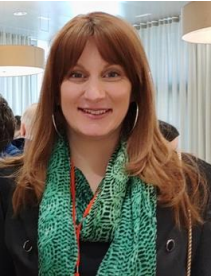
Position:Acting DirectorDirector of the BioSense Institute
Dr Dušanka Cvijanović is full professor in ecology. Her research centers on aquatic and wetland ecosystems, ecological restoration, and ecosystem responses to climate change and other environmental pressures. She integrates ecological expertise with advanced methods in remote sensing, spatial analysis, and artificial intelligence, with a particular focus on developing robust approaches to ecosystem monitoring and translating research outcomes into practical applications in nature conservation, water management, and the restoration of degraded habitats.
Her professional career includes extensive international collaboration through European and regional research projects and programmes, including Horizon Europe, FP7, Erasmus+, Interreg IPA ADRION, and COST, particularly within the Danube River Basin and the Western Balkans. She currently leads international research project and expert initiatives in wetland restoration, ecosystem monitoring, and climate change adaptation, bringing together researchers, protected-area managers, policymakers, and local communities. She also contributes to the development of scientific and technical foundations for nature conservation legislation, supporting the alignment of Serbia’s regulatory framework with the EU acquis and the establishment and effective implementation of the Natura 2000 network in Serbia. She chairs the international Expert Group on Habitat Monitoring and Conservation within the International Association for Danube Research (IAD).
Her international experience includes professional training and academic collaboration with institutions across Europe, the United States, and Asia, as well as engagements as a visiting professor and guest lecturer. These experiences have strengthened her commitment to knowledge exchange, institutional cooperation, and collective action in addressing climate change and other challenges that transcend national and disciplinary boundaries.
Mentoring early-career researchers is an important part of her work, particularly through interdisciplinary projects that bring together ecology, engineering, modelling, biotechnology, and digital technologies.